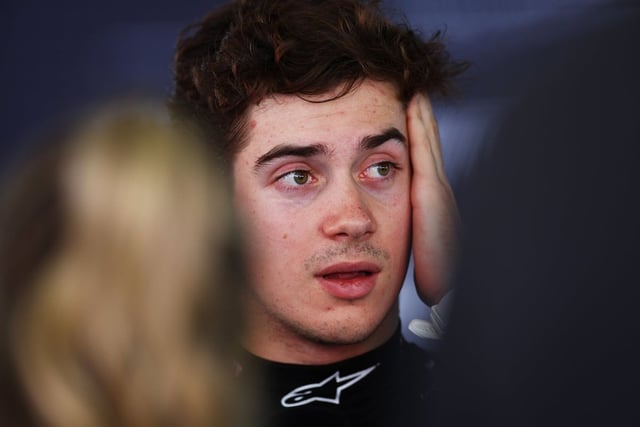
Alpine has been pushed to the point of publishing an open letter defending the treatment of Franco Colapinto, pushing back against a growing online narrative — fuelled by the Argentinian's devoted fanbase and a rough run of weekends — that the Enstone team is quietly sabotaging his car.
The team's statement, issued in the wake of the Japanese Grand Prix, could not have been more direct.
"Any questions about sabotage or not giving Franco the same car are completely unfounded," Alpine wrote in the letter.
The flashpoint was Colapinto's tangle with Haas rookie Oliver Bearman at Suzuka, a 50G impact that ended Bearman's race and prompted a serious safety review. Bearman's own account was pointed but restrained.
"Colapinto didn't give me much space," Bearman said after the incident.
Pundits reviewing the footage have been split on whether Colapinto was at fault, with most landing on a middle position: that a late defensive move combined with brutal 2026 closing speeds to create a collision that was, by the standards of modern grand prix racing, almost inevitable.
"I think it's more like the closing speeds are so insane, like so insane that he would have seen him last minute," one reviewer observed of the incident. "And I'm not surprised in some ways that a driver would react like that. Like you you always tried to react to defend your position. It was too late. He reacted too late."
Another analyst invoked Martin Brundle's vocabulary to describe what happened.
"You know, it is in the driver's nature to want to try and stop someone overtaking them. Um, it's just unfortunately for him, as Martin Brundle would say, a day late and a dollar short, his famous catchphrase," the commentator said.
That context has done nothing to slow the wave of conspiracy theorising online, which is partly why Alpine felt compelled to intervene publicly — and partly why the controversy has been framed as a wider 2026 safety story. Fernando Alonso and others have spent weeks warning that the speed differentials between cars with and without battery energy are producing closing rates the sport has not designed around.
"I think the drivers concerns are absolutely you know spoton," one pundit said of Alonso's public warnings. "They've mentioned it a lot of them not just Alonso has mentioned that the closing speeds is the thing they're most concerned about and this incident right here we've we've seen exactly that."
For Colapinto himself, the Suzuka crash has threatened to overshadow what has actually been a more encouraging season than his first year in Formula 1. Speaking ahead of Japan, he made clear that 2026 feels markedly different from the year before.
"Um, I'm happier, of course, that when you can fight a bit further up, it it makes you feel more confident and makes you, you know, give that extra little bit in in different situations," Colapinto said. "And I think when you are so close to get through Q3 to you know when you're in the fight it is different and last year unfortunately we didn't have that this year is looking much better and um of course the car steps and it's looking much closer to our teams and that I think also knowing that you we have a lot of performance coming or that we see many different things to improve."
He also described how 2026's new power unit dynamics had changed the way he felt about mid-race battles.
"Fighting cars with a different PU because I think that energy management is different between the teams and between the the different PU manufacturers and then it becomes a bit um a bit easier I think to to fight to defend as well bit more difficult but it it kind of brings battles a bit closer with each other because it's so different where the teams use the energies which makes it bit more interesting," Colapinto said.
Alpine's open letter is not the end of the conversation — if anything, it has given the theory more oxygen in online fan communities. But the team has now set its position on the record: no sabotage, no inferior machinery, and a driver it still publicly backs.
Source: youtube.com