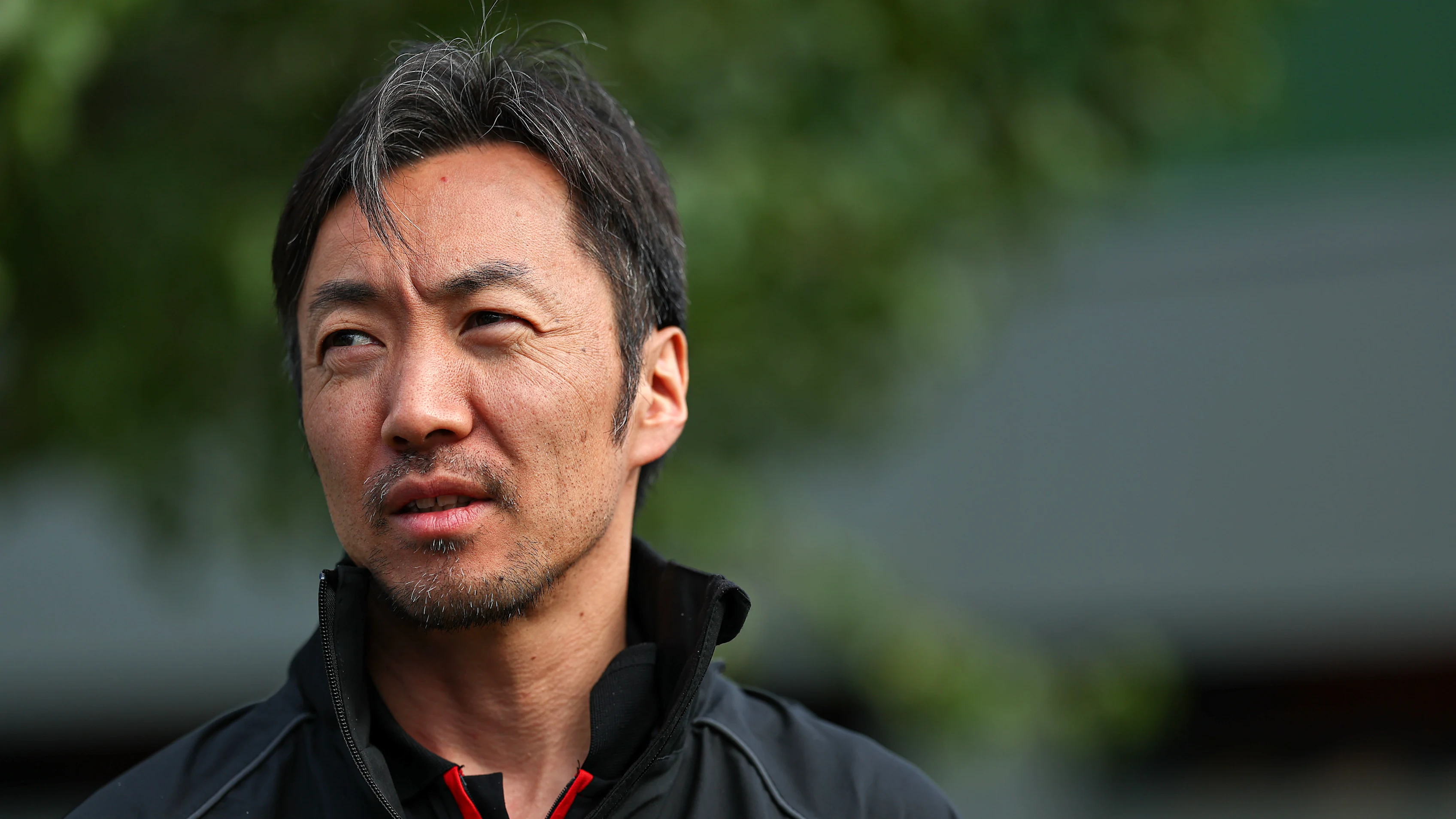
Ayao Komatsu doesn't usually do long-form interviews. When the Haas Formula 1 team principal finally sat down for an Essential F1 podcast special this month, the conversation drifted into two of the most revealing subjects he has ever discussed publicly: the brutal pace of the 2026 regulation era, and the night in Bahrain in 2020 when he watched Romain Grosjean's car burst into a wall of fire and assumed his driver was dead.
Komatsu, who took over as Haas team principal in early 2024, framed the current 2026 season as a fight that has barely begun.
"I'm really really grateful that we got Christmas shutdown now in Formula 1, because if it wasn't for shutdown, nobody would have stopped," Komatsu said.
That comment lands hard for a small team like Haas. Komatsu argues 2026 is not really about who built the best chassis in the winter — it is about who can keep developing through the year fastest.
"We all want drivers to be driving to the limit of the grip in qualifying, which wasn't the case before," he said. "Now is a completely development race, which is of course a huge challenge for us. But I'm not sitting here complaining. That's who we are. It's a huge challenge. What you see now, I bet it's going to be very different to what you see in race 20 or race 22."
Translation: the 2026 grid we know today is not the 2026 grid we will see by Abu Dhabi. Komatsu is publicly preparing fans, sponsors and his own factory for an in-season order shuffle that he believes will be unprecedented under the new rules — and he is also signalling that Haas, with its leaner budget and outsourced architecture, has to accept that brutal calculus rather than fight it.
The Essential F1 hosts then guided the conversation back to one of the most traumatic moments in modern Formula 1 history. On the opening lap of the 2020 Bahrain Grand Prix, Grosjean — then a Haas driver — speared through the barriers at Turn 3, splitting his car in two and trapping himself in a fireball for nearly half a minute before climbing out alive. Komatsu was on the Haas pit wall.
"I couldn't even cry," Komatsu said quietly. "Initially I was on the pit wall. I saw the fire goes up. I didn't know immediately it was Roman. Then I'm sure everything felt like eternity, but I'm sure it was really quick. But then once I realised Roman, that was Roman — like, immediately you think he's dead, right? I didn't see him come out."
Six years on, the rawness of the recollection is striking. There is no rehearsed line about "the safety of modern Formula 1." There is the engineer's brain replaying the timeline, and then there is the human reaction — the absence of tears, the assumption of the worst, the gap between the fire on TV and the silence on the radio.
The contrast across the two halves of the interview is what gives the appearance its weight. The same man arguing that Haas must outsmart Mercedes, Ferrari and Red Bull on in-season development is also the man still working from the memory of a driver he thought he had lost.
Komatsu, who patiently spent the early minutes of the podcast correcting host pronunciations of his own name ("All of them is fine because all of them are equally wrong"), came across as understated rather than evasive. But his core message about 2026 was clear: the season Formula 1 fans are watching today is a sketch of one that will look different by the autumn — and Haas, for all the financial headwinds, intends to be one of the teams still moving forward when the rest start to plateau.
Source: youtube.com