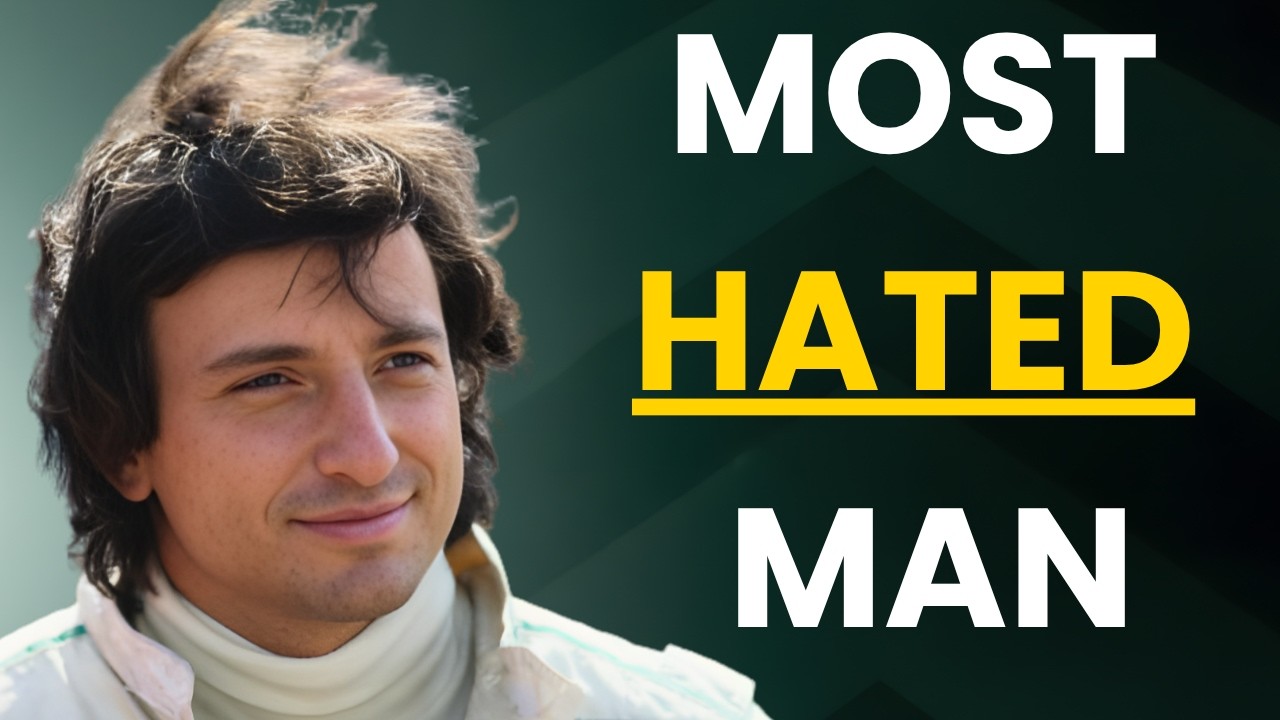
Adrian Newey spent much of his Williams years designing the car that allowed Nigel Mansell to throw himself at Ayrton Senna for the 1991 title. His retrospective reading of that season, revived in a new Circuit Stories historical retrospective on Riccardo Patrese, is a pointed correction of the mythology that has built up around that year.
As Newey observed, Mansell quickly came to the realisation during 1991 that his biggest threat for the world championship wasn't Senna's McLaren Honda or Alain Prost's Ferrari. It was the sister Williams, driven by the man everyone else kept writing off.
It is a claim that cuts against decades of historical retelling. The Williams-Honda FW14 was quick enough to put Mansell in a straight fight with Senna all year; the romance of that battle, complete with Mansell's walking out of Montreal with a raised finger to the pit wall and Senna's push of his own stalled McLaren across the line at Interlagos, has dominated the narrative of the season. But Newey's paddock-eye view was that the quieter internal rivalry was the dangerous one, because Patrese had the same car and the Williams itself was that weekend-to-weekend unpredictable.
Circuit Stories' retelling catches Patrese in his own words about the same era. Reflecting on the late eighties and nineties section of his Williams career, Patrese admitted the edge had sometimes cost him paddock goodwill. "I had been overly aggressive in some seasons," he said, specifically referring to the 1978 campaign at Arrows and incidents like his blocking of Ronnie Peterson in Sweden. The retrospective also revisits the infamous Watkins Glen episode of that year, when Mario Andretti and other drivers organised a boycott against Patrese. "It was the most shameful episode of my racing career," Andretti conceded decades later, with the kind of regret that only emerges once a driver's full body of work has been re-evaluated.
By 1991, Patrese's reputation had shifted. The Italian had become the quiet metronome of the Williams garage; the driver who didn't extract the same out-and-out pace as Mansell over a single lap but who could deliver weekends where the Briton either retired, made an error, or simply found Patrese inside him on the opening lap. The reason Newey frames Patrese as the real 1991 threat is because, in a car as strong as the FW14 was at its best, the two Williams drivers were essentially racing for the championship against each other before they were racing anyone else. Every point Patrese took was a point Mansell did not.
Patrese himself remembered that period as the best and worst of his career depending on the machinery. "It was the worst car I ever drove," he said of the 1985 Alfa Romeo he had piloted a few years earlier, the contrast between that season and his later Williams years underlining just how dramatically equipment shaped his reputation. By 1991, in equal kit to Mansell, he was consistently in the top five and occasionally genuinely embarrassing the Briton.
Newey's re-assessment matters now because the 2026 grid has its own version of this dynamic. Andrea Kimi Antonelli leads the championship from George Russell after two Mercedes wins, and several pundits have already noted that the defining battle for this title could be an in-team one rather than a cross-garage fight with Red Bull or McLaren. Newey's line about Mansell realising his own teammate was the real threat is the historical template. For Russell, studying how Mansell dealt with Patrese in 1991, and how Patrese himself turned a reputational low in the late 1970s into one of the most productive late-career runs on the grid, might be more useful than any amount of time spent worrying about the car in the Red Bull garage.
Source: youtube.com