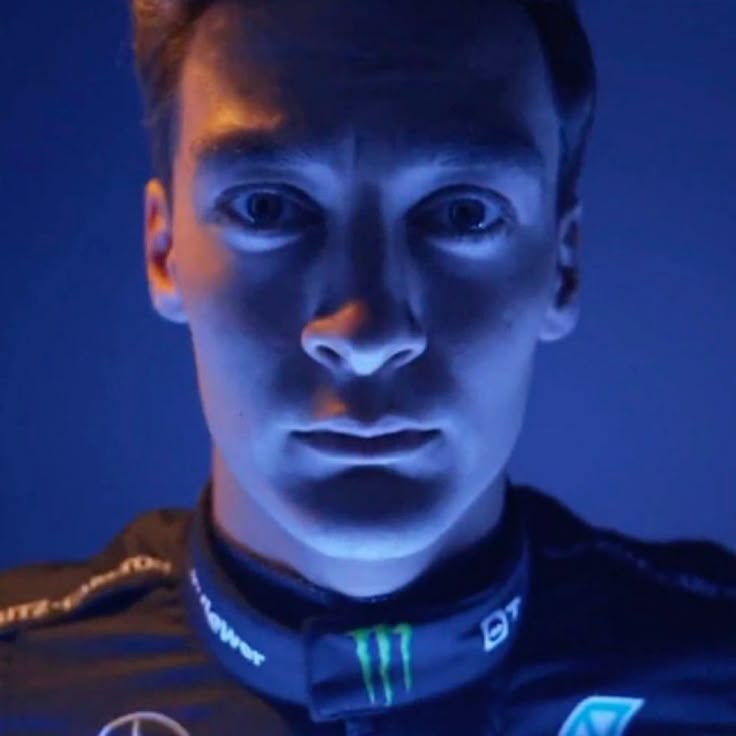
Formula 1 has a long tradition of teams politely calling each other's innovations "problems." Most of the time, it's gamesmanship — a clever design is reframed as an accident to head off a protest. At Suzuka, George Russell delivered a version of the same line with an unusual level of conviction: Mercedes's front-wing behaviour, he insisted, is not a secret weapon.
Asked directly about slow-motion footage showing the W17's front wing closing in two distinct stages down high-speed straights, Russell was clear:
"It wasn't intentional and I don't think it's well, it's not an advantage for sure. It's actually a problem. So, it's something we're trying to to solve. Um it isn't a straightforward solution but there is definitely no no advantage to that because when we break the front wing is [...]"
For a team currently holding the balance of 2026 performance, it was a striking admission.
What the video showed
In the week leading into Suzuka, onboards circulating on social media showed the Mercedes front wing moving through two discrete positions on high-speed sections of the lap — not the smooth, continuous flex that aeroelastic designs normally produce. To rivals, it looked suspiciously like a staged load-shedding trick.
F1 TV's Tech Talk analysts looked into it and found nothing sinister. According to their technical sources, it was a hydraulic actuator timing inconsistency:
"According to the team, it was just a slight error in the adjustment or the settings of the hydraulic actuator used to move the front wing. So, perhaps nothing really to see here."
In other words: a setting Mercedes set slightly wrong, not a setting designed to game the rules.
Why Russell's admission matters
What makes Russell's comment notable is the direction of the spin. Teams caught with legally grey innovations usually say as little as possible. They shrug, refer questions to engineers, and let the FIA make a ruling. Russell went out of his way to insist the behaviour is actually costing lap time — an argument that is only worth making if the rest of the pit lane is genuinely starting to ask questions.
Russell also used the Suzuka media session to hit back at broader political pressure on Mercedes:
"That's just that's just how the sport the sport goes to be honest. Uh has always been the case. At the end of the day, our team's worked so hard to to get ourself in this position and the best team should come out on top."
The framing was simple: yes, Mercedes is fast. No, nothing is being done illegally. And yes, people would prefer that Mercedes weren't back in front after four years away.
The bigger picture
Mercedes's 2026 pace has unsettled the rest of the grid in ways that go beyond one wing. Customer teams like McLaren are benefitting from the Mercedes engine and are closing on the works team; Ferrari admits it is 7–8 tenths off. The front-wing question, in that context, feels less like a technical concern and more like a political one — the kind of rumour that becomes a protest if allowed to grow.
By naming the inconsistency himself and framing it as a team-owned problem, Russell has tried to kill the story early. Whether rivals believe him is a different matter. Russell's own words, though, leave no ambiguity: Mercedes is not racing at an advantage because of the front wing. If anything, in his telling, they're racing despite it.
Source: youtube.com