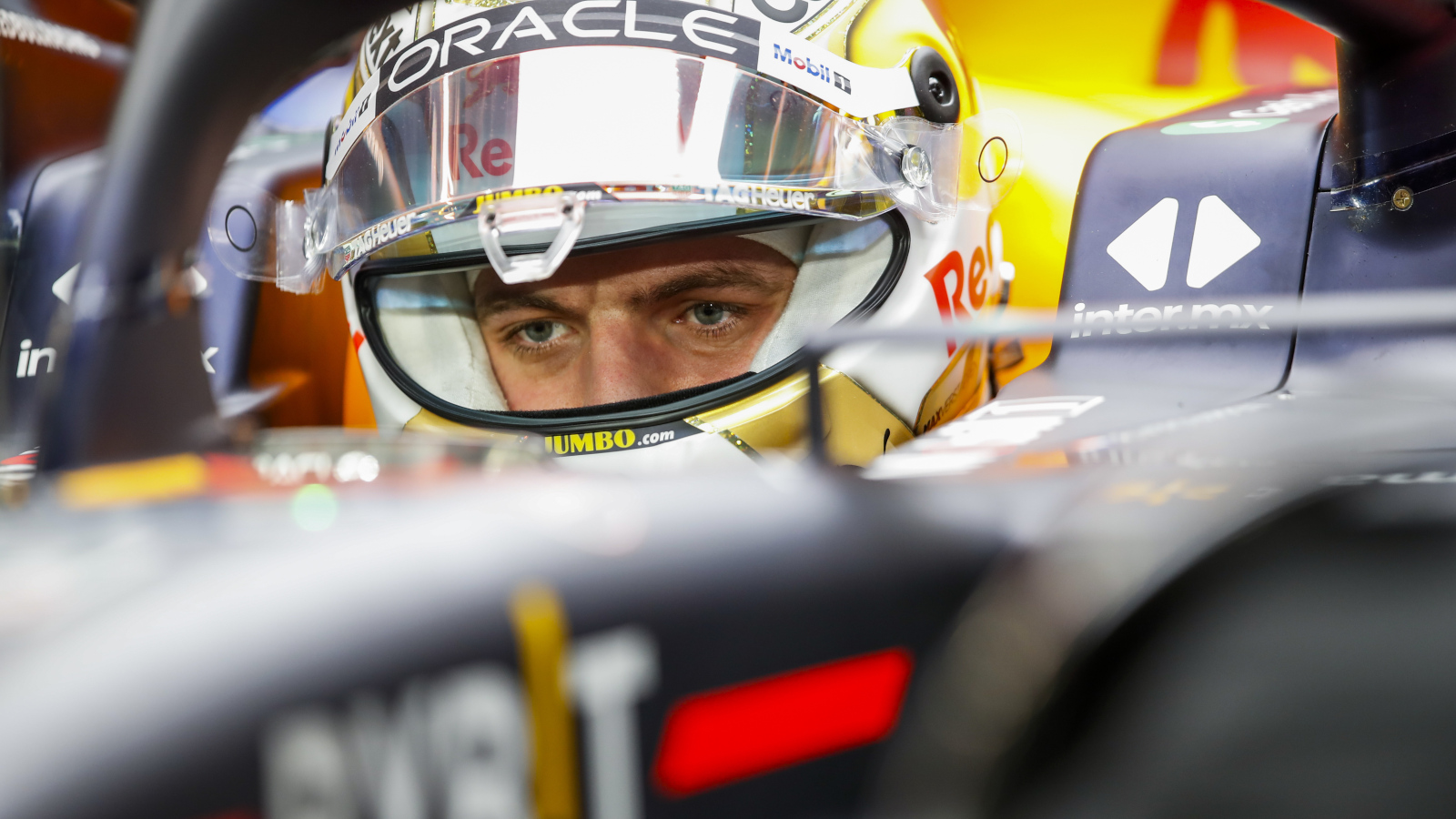
Max Verstappen has a Canadian Grand Prix history most current drivers can only catalogue. Three wins in a row between 2022 and 2024 placed him alongside Lewis Hamilton and Michael Schumacher as the only drivers to take consecutive Montreal hat-tricks. The 2023 race, which he led from lights to flag for all 70 laps, was an exercise in extracting every shred of margin from a generational Red Bull car. The 2024 race, run on a Sunday that flipped between wet and dry, was an exhibition of his racecraft in conditions that often catch the rest of the grid out.
That history is the problem. None of it travels into 2026.
Red Bull's switch from Honda RBPT to Ford for the new power-unit era was meant to be one of the season's defining engineering bets. So far the public results have been blunt. The team has only one finish above fifth in the opening four races. Verstappen has not been on the podium. The reigning constructors' champion of 2023 is fighting for points the way the team's customer outfits used to.
GPblog's pre-Canada analysis isolates the geometry behind the slump and explains why Montreal sharpens it. "The circuit's characteristics had long been cited as a potential mismatch for how Red Bull liked to build their cars: heavily loaded in the high-speed corners, but punished by the long flat straights and heavy braking zones that reward power and stopping efficiency over pure aerodynamic grip," the publication wrote. In 2022, 2023 and 2024 Red Bull simply had enough headroom in chassis and powertrain to mask that. In 2026, with the Ford-Red Bull Powertrains unit running behind Mercedes and Ferrari on raw deployment and behind even the Honda-powered Aston Martins on cooling-corner tuning, that headroom is gone.
The 2026 power unit split adds a second layer. The ICE makes a smaller share of total output than in the V6 hybrid era, with the electrical side now expected to do 50% of the work. Red Bull's deployment software has been the area cited internally as the slowest to catch up. Both Charles Leclerc and George Russell have already gone on the record this season noting that all teams faced battery problems at the lights, but that the curve from race one to race four has been steepest at Mercedes. Red Bull, on the same curve, has not moved.
Montreal does not forgive that. The lap is built around three long straights into heavy braking zones — Turn 1, Turn 10 and the final chicane — and a final-sector wall-of-champions section that punishes any car with snap mid-corner. The 2026 cars, with their reduced downforce and reliance on active aero in straight mode, already shift their balance more aggressively than their predecessors. A car running short of energy at the end of a straight has nowhere to hide in the braking zone. A car running short of front-end stability at low speed has no run-off into the chicane.
The new mechanism that could help is the FIA's adjusted ADUO process. Manufacturers assessed as 2-4% behind the best engine will receive one additional upgrade per season; those more than 4% behind receive two. The Canadian Grand Prix marks the end of the formal monitoring window before FIA allocations are confirmed. Red Bull, if their early-season form is taken at face value, are in line for the second bracket.
That is one route. The other is a clean weekend of execution from Verstappen on a track he has owned. Neither will produce a 70-lap lights-to-flag clearance. The mountain in front of Red Bull this weekend is being asked to prove that the worst hand on the grid in 2026 can still be played by the best driver.
Source: gpblog.com