Formula 1 is moving quickly to recalibrate its 2026 technical framework, with a significant set of changes set to take effect at the Miami Grand Prix. After gathering data from the opening rounds in Australia, China and Japan, the FIA convened an online meeting on Monday with team principals, power unit manufacturer CEOs and Formula One Management. Participants reached unanimous agreement on a four-part package aimed at energy deployment, race starts and wet-weather running for the remainder of the season.
The centerpiece addresses superclipping, the scenario where drivers spend prolonged stretches harvesting energy rather than racing at full power. The maximum permitted recharge is being reduced from 8 MJ to 7 MJ, while peak superclip power rises from 250 kW to 350 kW. Together, the adjustments are designed to shorten harvesting phases and increase flat-out running; under the new parameters, superclip duration is expected to drop to roughly two to four seconds per lap.
Race deployment is also being smoothed. A cap will apply to the boost system, with a 150 kW limit at activation to prevent the abrupt power spikes seen when drivers engage the system. The MGU-K will continue to deliver up to 350 kW through acceleration zones—from corner exit to the braking point—before dropping to 250 kW elsewhere on the lap. The aim is to temper high closing speeds while preserving overtaking opportunities.
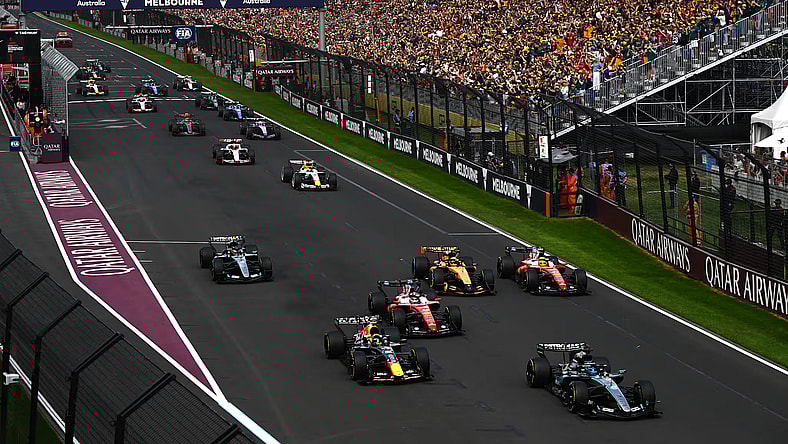
Starts receive a safety-focused tweak on a slightly different timeline. A new detection system will identify cars with abnormally slow acceleration off the line and automatically trigger MGU-K deployment to ensure a safe minimum. Flashing rear and lateral lights will alert following drivers. Miami will serve as the live trial, with full adoption to follow after officials analyze how the system performs there.
Wet-weather procedures are being refined as well. Intermediate tire blanket temperatures are set to rise following direct driver feedback, ERS deployment will be reduced in low-grip conditions, and rear lighting will be simplified to improve visibility through spray. Collectively, the changes target better confidence and clearer signaling when conditions deteriorate.
The measures still require approval via an FIA World Motor Sport Council e-vote. Given the unanimous support from teams, power unit manufacturers and Formula One Management, that step is widely viewed as a formality, paving the way for Miami to mark a turning point in the 2026 campaign. Teams now face a rapid operational reset as they adjust software, deployment maps and procedures ahead of the weekend.
What to watch next: the balance between race pace and energy harvesting under the revised limits, whether the activation cap produces more predictable straight-line battles, and how the start-line safeguard performs in traffic. In wet conditions, visibility improvements and tire warm-up will also be under close scrutiny as the sport evaluates the impact of these midseason corrections.
Source: sportsnaut.com