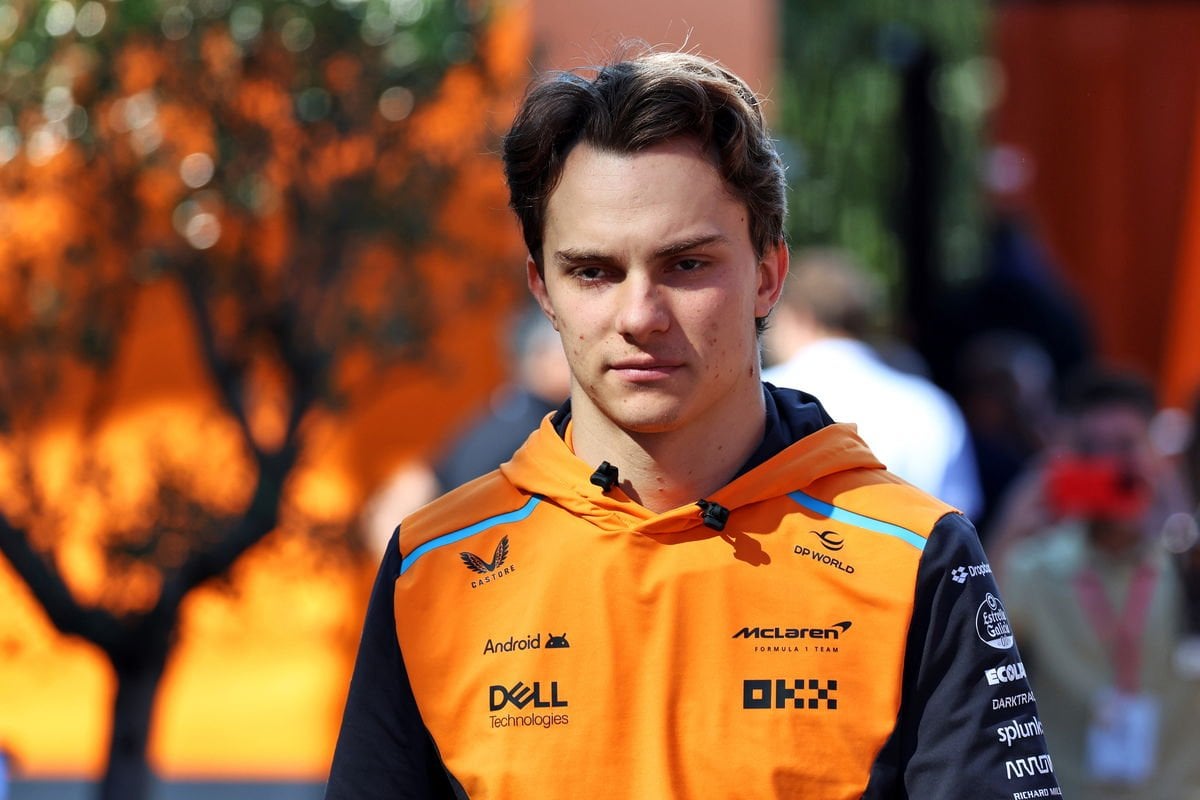
Andrea Stella does not usually telegraph his car. The McLaren team principal made an exception in the run-up to Miami, openly describing the MCL40's biggest 2026 development push as a two-race plan deliberately split between Miami and the Canadian Grand Prix. Part one arrived at the Miami International Autodrome. Part two is in Montreal this weekend.
According to coverage by F1 Perspective, the Miami package was focused on the front wing and the floor, changes designed to improve how the MCL40 generates downforce in medium-speed corners. The result was visible immediately. Lando Norris took sprint pole, he and Oscar Piastri finished 1-2 in the sprint, and Norris finished second in the Grand Prix behind Kimi Antonelli. A team that started 2026 playing catch-up to its own Mercedes power-unit supplier suddenly looked like the most serious threat to the works Mercedes team in race conditions.
The Canada half completes the aerodynamic picture. The package is understood to target the rear of the car, with airflow management around the diffuser and rear wing aimed at reducing drag on the long straights while preserving the medium-speed cornering performance the Miami upgrade delivered. If both halves work together as designed, McLaren arrives in Barcelona with a car that is genuinely competitive with Mercedes across every circuit profile.
Stella has previously framed 2026 as a four-team race separated by very little lap time. McLaren now sits 16 points behind Ferrari in the constructors' standings, a gap that was significantly larger six weeks ago. The Canada upgrade is the lever Stella is using to swap second place with Maranello before the European leg of the season locks in.
The sprint format adds a sharpness to the timing. The Canadian Grand Prix is the first sprint in the Circuit Gilles Villeneuve's history. The schedule allows one free practice session, then sprint qualifying, then the sprint race, then Grand Prix qualifying, then Sunday. Every team in Montreal has exactly one hour of running to validate a new package before competitive sessions begin. For McLaren that is one hour to find out whether the rear-end redesign delivers, on a dusty low-grip surface that does not represent itself by lap thirty.
The internal McLaren risk is also visible. The MCL40 still runs the customer Mercedes power unit. The Canada track punishes anyone who pays a power penalty, and the second half of the package needs to extract enough drag reduction to neutralise that exposure. If it works, Stella has a fully optimised car heading into Spain. If it does not, the gap to Ferrari widens again on a circuit that should have closed it.
Norris and Piastri are arriving on different trajectories. Norris has won the McLaren end-of-year award he credited last weekend for starting his career, and he sits inside the championship picture. Piastri is back from a karting reset in Brignoles with Alex Albon and Gabriel Bortoleto, freshening up after a difficult run of low-grip circuits. Stella's two-driver dynamic is already its own talking point, but both drivers benefit identically from the rear-end package landing as intended.
The surgical part of Stella's plan is what is visible only on a stopwatch. Watch the speed traps in Montreal and watch the traction zone out of the hairpin. If McLaren's straight-line speed has crept up without losing its medium-speed cornering, the two-race push has worked exactly the way Stella drew it on the whiteboard before Miami.
Source: youtube.com