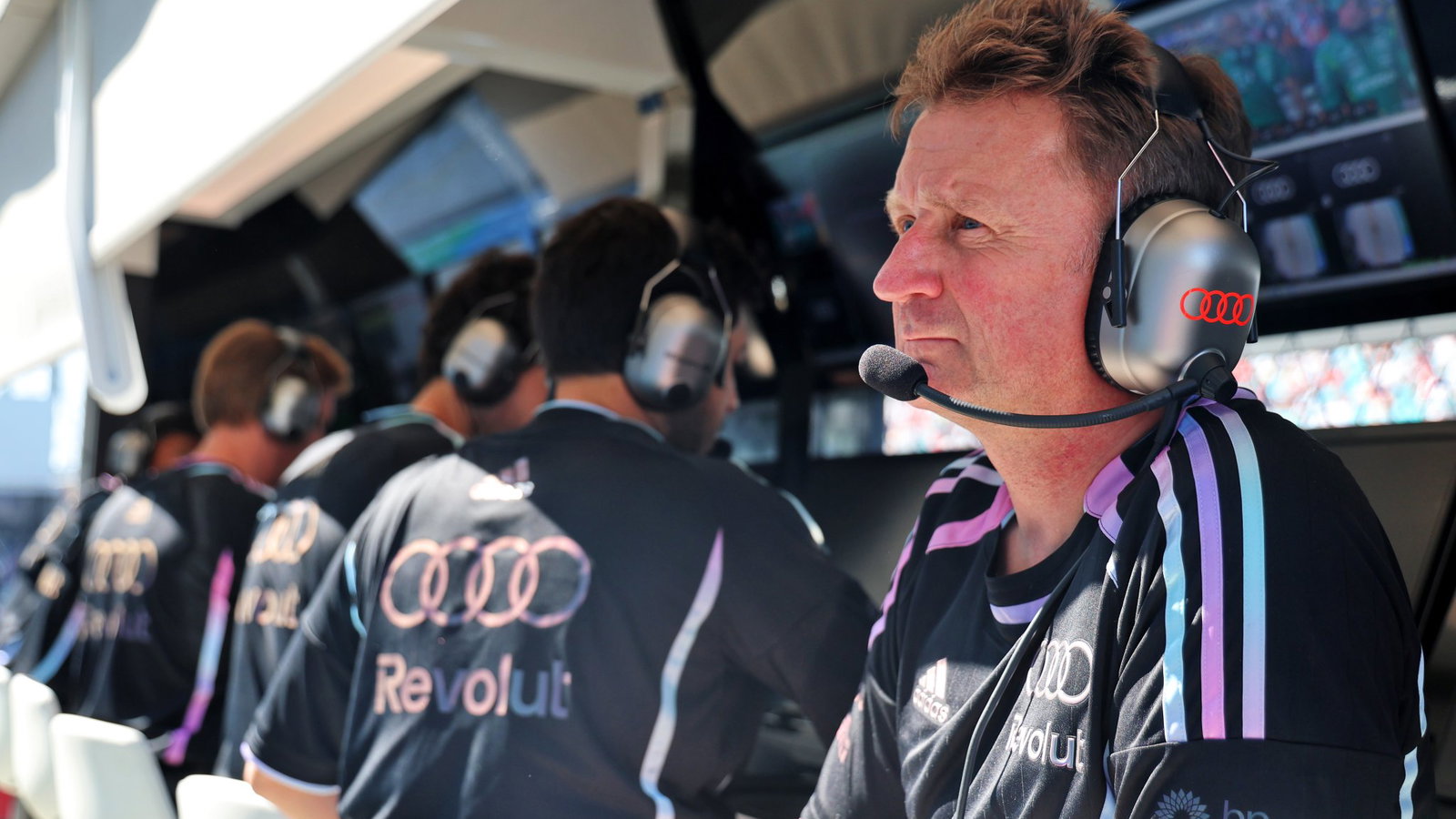
Audi's first F1 season as a full works manufacturer was always going to be hard. It is, in the words of new racing director Allan McNish, getting harder than it needs to be — for one specific reason.
After Miami, McNish sat down with media and was direct about where the team's biggest 2026 problem lies. It is not the chassis, not the energy management on the new power unit, and not the rookies they have promoted into race seats. It is reliability.
"Well, obviously you don't want them — that is for sure," McNish said of the team's accumulating retirements.
"Definitely, we need to tidy those, there's no question about it."
The bald numbers explain his frustration. Audi has now suffered three pre-race retirements across the opening four rounds of 2026 — Australia, China and now Miami. None of them were performance failures in the conventional sense; in each case the cars never made it to a meaningful chunk of the race. McNish is the most experienced motorsport hand the team has hired, a Le Mans winner with two decades of campaigning behind him, and his read on the situation is the one Audi will live by.
He went out of his way to say that the most recent technical breach — uncovered in scrutineering on Saturday — had not given the car a competitive advantage.
"It's not something that was performance beneficial yesterday for Gabi," he said, referring to driver Gabriel Bortoleto.
That distinction matters internally. Audi can absorb a one-off paperwork issue. What it cannot absorb, in McNish's view, is the recurring image of one of its cars sitting in the garage at the formation lap.
"The frustrating part is not having two cars at the start on Saturday."
The implication is that Audi knows it has decent raw pace in the new C46 chassis, but is struggling to convert qualifying laps into completed grand prix distance. McNish framed it as a chicken-and-egg problem: until the team can rely on its cars finishing races, it cannot redirect engineering bandwidth toward genuine performance development. The 2026 power unit, in particular, is shared with Sauber Audi's broader programme and demands extensive learning hours that the team simply has not been able to accumulate.
"We need reliability, and then we can also start developing in other areas as well," McNish said.
It is a deliberately unglamorous diagnosis. Audi entered F1 with a marketing campaign built around long-term ambition — public statements about challenging at the front by the end of the decade, a commitment to a fully electric road-car alignment, and cultural noise about Audi-branded race cars at every grand prix. Six months in, the team's racing director is publicly stating that the 2026 priority is making both cars start the race.
There is also a darker context. FIA president Mohammed Ben Sulayem has separately confirmed his intention to retire the current 2026 hybrid power unit formula by 2030 in favour of a return to V8 engines. Audi's whole F1 entry was built around the new hybrid architecture and its road-car relevance. Every race that ends with one or both Audi cars stranded in the garage is a race the team cannot use to validate the project before its underlying regulations potentially get scrapped.
McNish, characteristically, is not catastrophising. The plan, he said, is to fix the reliability and then attack the rest. But before Canada, the message is unambiguous: Audi needs both cars on the grid before it can do anything else.
Source: newsformula.one