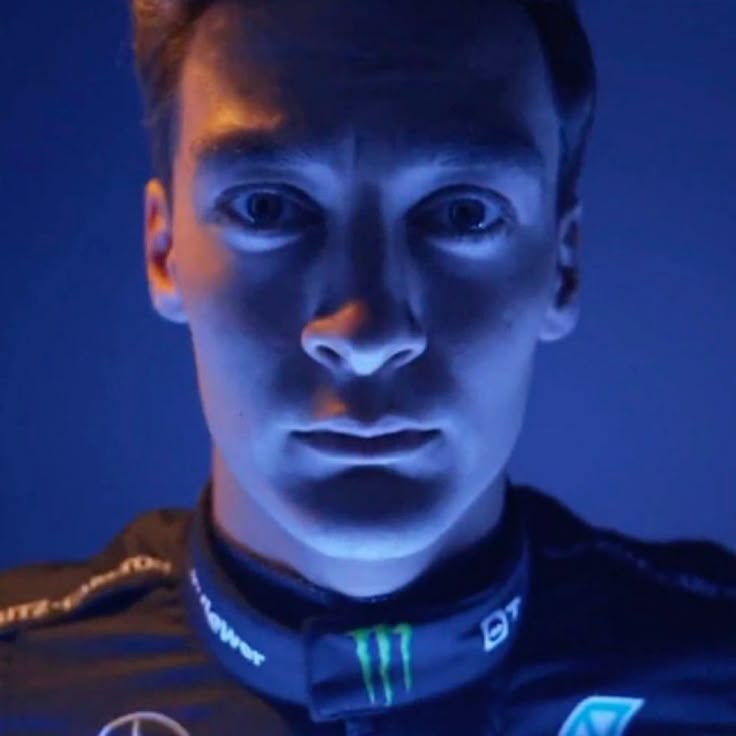
George Russell will start Saturday's Canadian Grand Prix Sprint from pole position after edging Mercedes team-mate Kimi Antonelli by less than seven hundredths of a second, with the lap itself only the second-most surprising part of his day.
The most surprising part — at least by Russell's own account — was how he got there.
"It's probably the best qualifying session we had for some time," Russell said after climbing out of the W17. "Just really great work with the engineers, the setup changes. The car felt really fantastic from P1 and we made just subtle changes going into quali. P1 and P2 was looking good and then I don't know why the others are able to like turn up a little bit more. I don't know. But I'm just happy to be there in the fight. I was having so much fun out there."
Then the line that travelled.
"And also, the fact that I didn't do the sim and I felt it's the best I felt all year. So I think that's the way forward for me, honestly."
For anyone who has spent time inside an F1 driver's pre-event week, the admission lands harder than it reads. Most teams now build the days before a Grand Prix around the simulator session — drivers running long simulated stints on the venue's tyre allocation, dialling in setup direction, walking into the paddock on Thursday with a starting point that the race engineer can refine through Friday. Mercedes' Brackley-based loop, which Russell normally runs, is one of the most highly regarded driver-in-the-loop systems on the grid.
Russell, in effect, deleted that step from his preparation for Canada and walked into the only free practice session of a Sprint weekend without his usual reference data. The result was a Friday in which he was on the pace from the first run, used the FP1 hour to refine balance rather than learn the car, and put the car on pole on a circuit where he has historically excelled.
The context inside Mercedes is also worth keeping in view. Antonelli leads the 2026 championship. Russell has been the team's most consistent qualifier across the opening four rounds but has lost the headline races to his rookie team-mate. The narrative arriving in Montreal was that this was a circuit where the senior driver would reset the order inside the garage.
Peter Windsor's Friday review backed Russell's read of the day. "Mercedes the best car in Canada, no doubt about that," Windsor said on his analysis channel. "Excellent lap from George. Good recovery lap after everything that's been going on in the last three races for him."
Russell's no-sim approach is not, on its face, a strategic statement against simulator work — Mercedes will continue to develop the W17 in Brackley, and the loop will continue to be the central tool for the 2026 development arc. What he is suggesting is a more personal trade. The pre-event sim session gives a driver a reference point, but it also locks in expectations of what a corner should feel like. On a circuit where the bumps and traction zones have already exposed the limits of the new 2026 ride-height window — Max Verstappen described his Red Bull's pedal stability as "horrendous" — walking in without those locked-in expectations may have been the unlock.
"I think that's the way forward for me, honestly," Russell said.
That may be a one-track experiment, or it may be the start of a deliberate change in his weekly routine. Either way, the driver in front of the field on Saturday morning in Montreal is the one who skipped the step his peers consider essential.
Source: newsformula.one