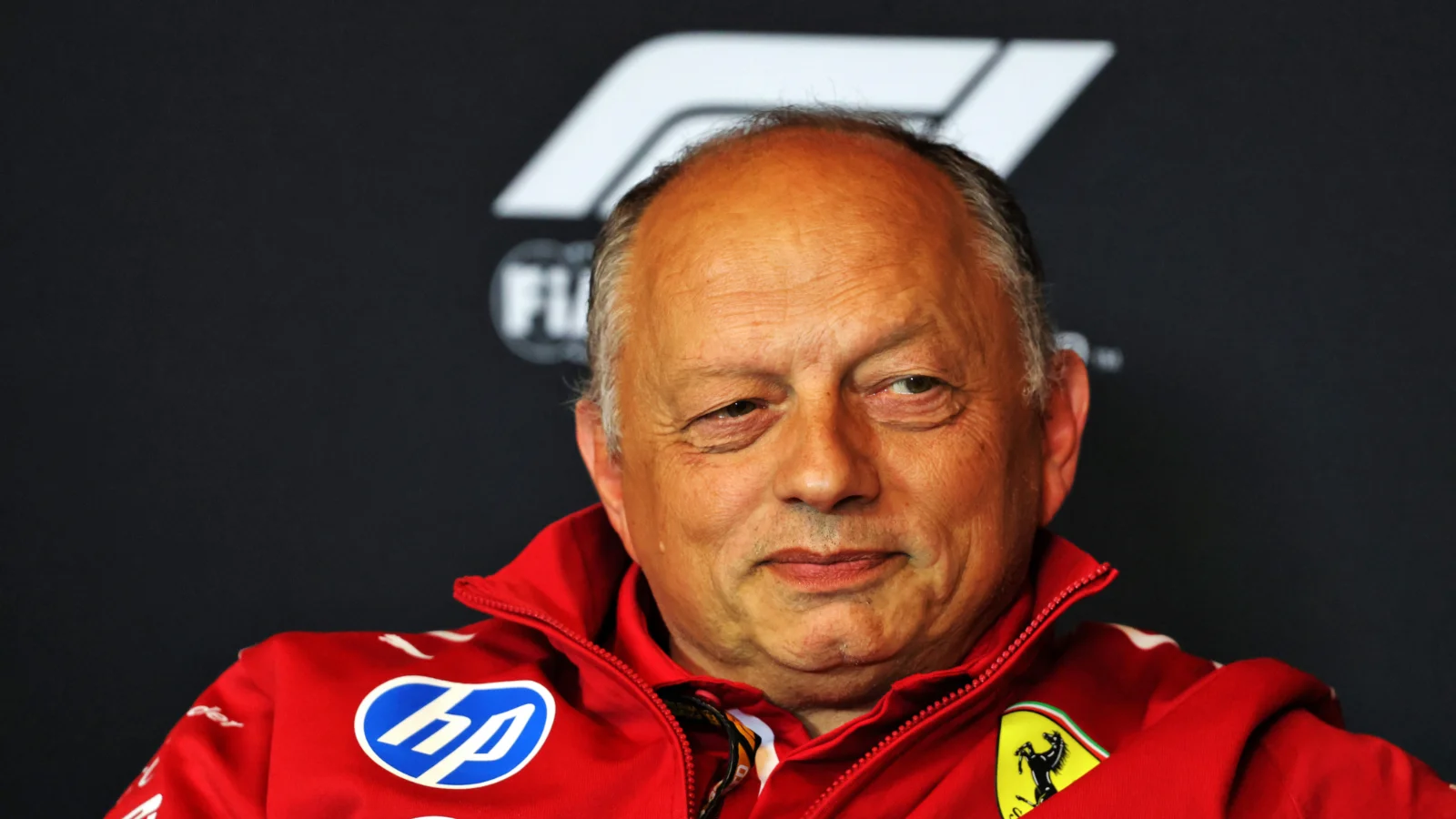
Fred Vasseur has given the clearest public signal yet that Ferrari's 2026 fightback is not going to come from its engine in the short term — and that the Scuderia is, instead, quietly building a strategy around a little-discussed clause in the FIA power unit regulations known as the ADO.
ADO stands for Additional Design and Upgrade opportunities. In plain terms, it is the regulatory safety valve the FIA introduced to prevent a runaway engine monopoly under the frozen 2026 formula. Manufacturers whose power units are measured to sit between 2 and 4 per cent behind the best-performing unit can, under the mechanism, unlock additional development tokens and in-season upgrade opportunities that are otherwise locked for the rest of the field.
Vasseur has not named the clause in his media sessions, but his language around Ferrari's position has left little doubt that he expects — and is planning for — Ferrari to qualify.
"We have to be lucid," Vasseur said after the Chinese Grand Prix, where Ferrari finished further adrift of Mercedes than the team had hoped. "It's a good weekend overall, but we are still far away of the Merc. We have still four, five, ten [tenths], and it's a lot. But we are not working only on the power unit, we are working everywhere. On the power unit, it's a bit more difficult because — until the ADO — it's frozen."
That sentence is the one that has caught paddock attention. By saying the engine is "frozen" until ADO, Vasseur is publicly conceding that Ferrari does not expect meaningful combustion gains through normal development channels and is instead waiting for the regulation to open the door.
The implication, as unpacked by a detailed analysis segment on the topic, is that Vasseur is actively structuring Ferrari's development programme around a rule rather than around a rival. The chassis team is being allowed to run flat out on its own priorities — floor, suspension, cooling, the much-discussed "Macarena" rotational rear wing — without being asked to compensate for the engine deficit. That compensation, Vasseur is betting, will come from the regulations themselves when the ADO threshold is met.
It is, in its way, an elegant solution to a very modern F1 problem. Under the frozen engine rules, a team that falls behind at the start of a regulatory cycle faces the uncomfortable prospect of five years of chasing. ADO is specifically designed to prevent that outcome. Ferrari's apparent plan is simply to read that rule more carefully than anyone else.
The risk, of course, is visibility. A team principal telling the paddock he expects to qualify for ADO is, in effect, a team principal telling the paddock his engine is underpowered. That is awkward for internal morale at Maranello and potentially unhelpful to Ferrari's relationships with Shell, its long-time fuel and oil partner whose development work is tightly entwined with the engine package.
But the alternative — staying quiet and doing nothing strategic about the gap — was clearly worse. Vasseur has chosen the route that keeps Ferrari's chassis programme free to push, its engine programme held for the mid-season regulatory unlock, and the political message clear: the real fight starts when the ADO switch flips.
Until then, Ferrari is playing for time. And, if Vasseur's calculation is right, for a rule the rest of the grid has not thought hard enough about.
Source: youtube.com