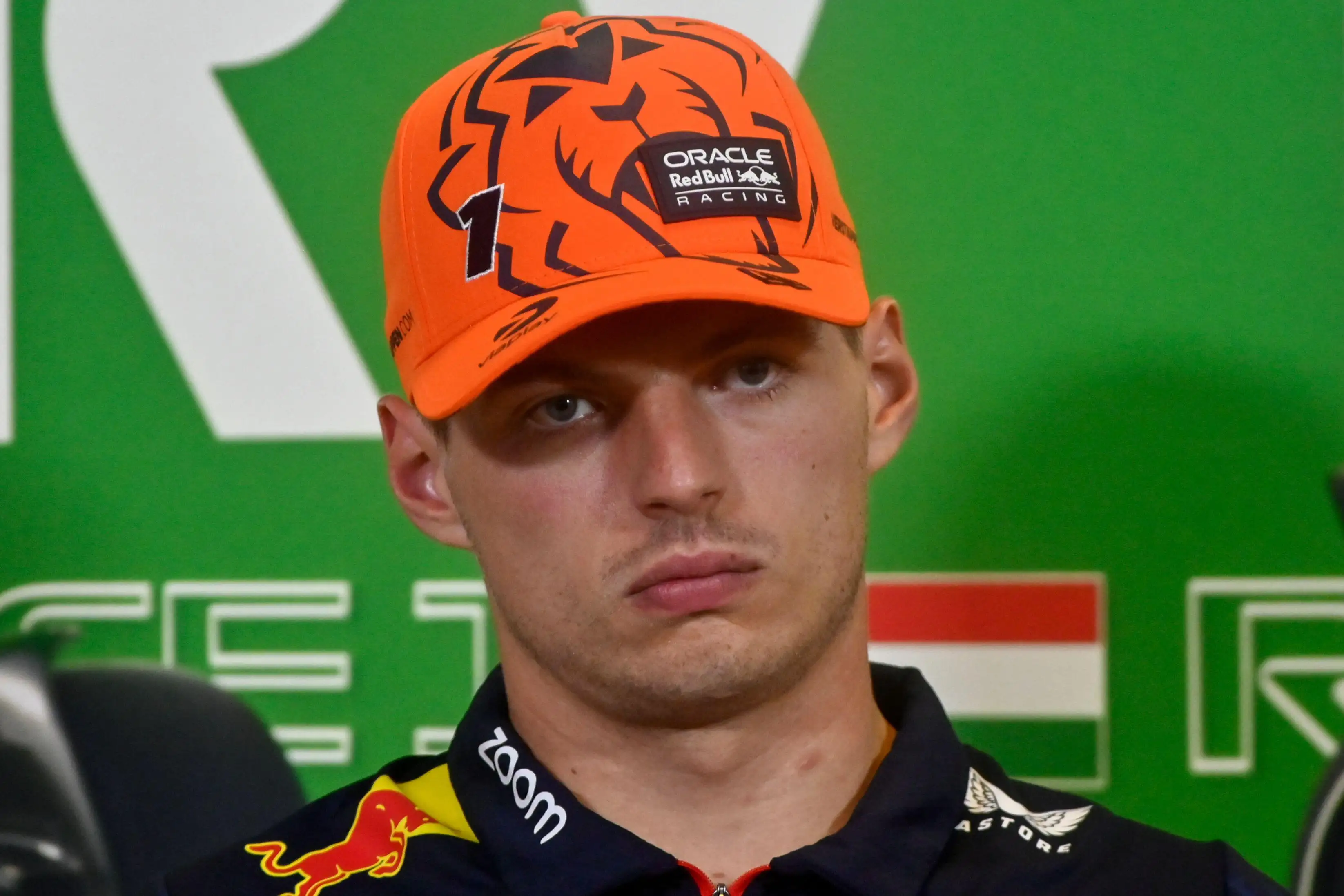
Max Verstappen rarely uses press conferences to manage expectations. He prefers to drive cars to the answer. On Friday and Saturday at Suzuka, however, the four-time World Champion was unusually frank about Red Bull's place in the 2026 pecking order — and the answer he gave was the kind teams normally try to bury until the end-of-year reset.
"I think we have bigger problems than what we had last year," Verstappen told reporters after qualifying. "Some parts of the car at the moment are not working how we want them to work."
For a team that walked into the new regulation era as the reigning champions, the admission was an inflection point. The 2025 RB-spec car had its own issues — particularly through tyre warm-up — but Red Bull had nonetheless converted it into another constructors' fight. The 2026 platform, on its driver's reading, has so far failed to clear that bar.
Friday: balance one way, grip the other
The diagnosis began on the Friday at Suzuka, when Verstappen described an FP1-to-FP2 swing that left engineers chasing two different cars across one day.
"Yeah, not very good, to be honest," Verstappen said after Friday practice. "Just lacking balance, grip — two opposites from FP1 to FP2, and both of them not very good. So from our side, a lot of work to be done to also understand why we're having these big problems at the moment."
For a driver whose entire competitive identity is built on exploiting precise rear-end behaviour, lacking balance in opposite directions across two sessions is not the kind of problem that gets solved by a setup tweak. It points to something more fundamental in how the new aero package and the 2026 power unit are interacting on a circuit Verstappen knows better than almost anyone on the grid.
No overnight miracles
Asked whether the team could engineer its way back into the front-runner conversation across the weekend, Verstappen lowered the temperature.
"It's very difficult to solve at the moment," he said. "So I don't expect miracles overnight. We just need to understand our issues a bit more — you know, why, where they are, where they are coming from."
The phrasing matters. Red Bull's strategy team has been operating all season under the assumption that targeted upgrades — most recently a chassis package due before Miami — will progressively unlock the car. Verstappen's framing here is different: the team needs to understand the problem before it can fix it, and the answer is not yet on the dyno.
The championship view
For the wider championship picture, Verstappen's verdict reframes one of the key narratives of the early season. With Mercedes' Kimi Antonelli leading the championship and McLaren benefiting from what Lewis Hamilton has openly called a Mercedes power-unit advantage, Red Bull are no longer the team setting the development agenda — they are the team trying to catch up to a moving target while diagnosing their own deficit.
Verstappen has spent the early flyaways alternating between blunt frustration and pointed silence. At Suzuka, he chose blunt. Whether Red Bull's response — both at the factory and on the track — matches that honesty will define what the rest of his 2026 looks like.
Source: newsformula.one