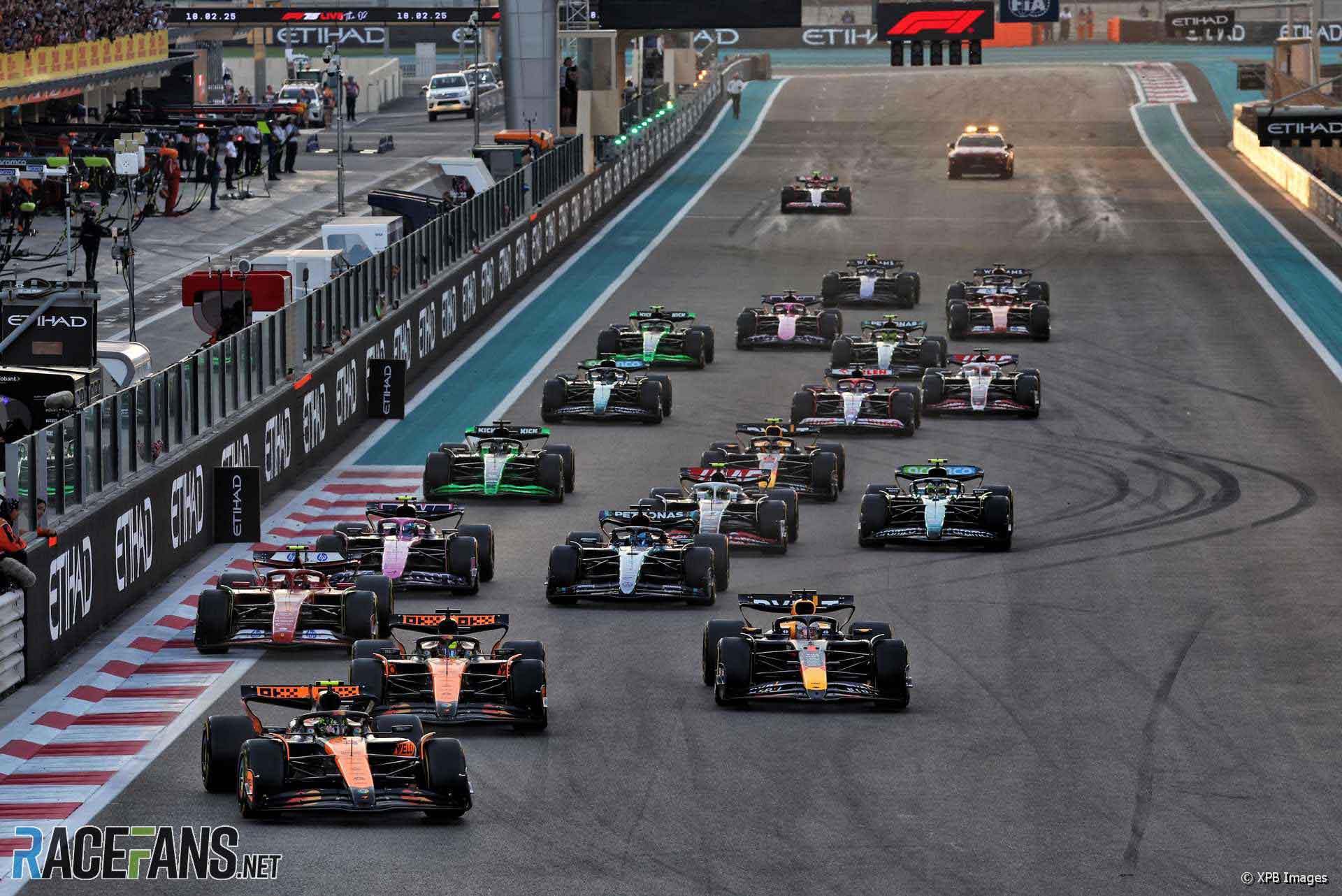
The 2025 Formula 1 season concludes under the lights of Yas Marina Circuit with the Abu Dhabi Grand Prix, where strategic decisions will play a decisive role in determining the final race winner of the campaign. Teams face complex calculations regarding tire degradation, pit stop windows, and potential safety car scenarios that could dramatically alter race outcomes.
Yas Marina's 5.281-kilometer layout features 16 corners and long straights that test both car performance and strategic execution. The circuit's smooth surface typically allows for multiple strategic approaches, though this year's revised tire compounds have introduced new variables into the equation.
Pirelli has brought the C3 hard, C4 medium, and C5 soft compounds to Abu Dhabi, creating the softest possible selection for the championship finale. Early practice sessions indicated significant performance differences between compounds, with the soft tire showing rapid degradation in high-fuel conditions.
Track temperature evolution remains a critical factor, with the race starting in daylight and concluding under full darkness. This transition affects tire behavior substantially, as cooler track conditions typically reduce degradation rates and alter compound performance characteristics.
Strategy analysts project that most teams will favor a two-stop approach given the high degradation observed during Friday practice. However, several midfield teams have shown stronger long-run pace on the hard compound, potentially opening one-stop possibilities for those starting outside the top positions.
The championship battle adds another layer to strategic considerations, with teams potentially employing different approaches based on their championship objectives. Those fighting for position in the constructors' standings may take greater risks to maximize their points haul.
Safety car probability stands at historically high levels for Yas Marina, with 60% of previous editions experiencing at least one interruption. Teams must remain flexible with their strategy calls, ready to adapt to changing circumstances throughout the 55-lap contest.
Qualifying results will ultimately determine the strategic starting point, with those starting on the front rows having greater flexibility in their initial compound choice. The undercut remains particularly powerful at Yas Marina due to the significant time loss in traffic.
As teams finalize their race plans, all eyes will be on tire performance data and weather conditions to determine the optimal path to victory in Formula 1's 2025 season finale.
Source: racefans.net