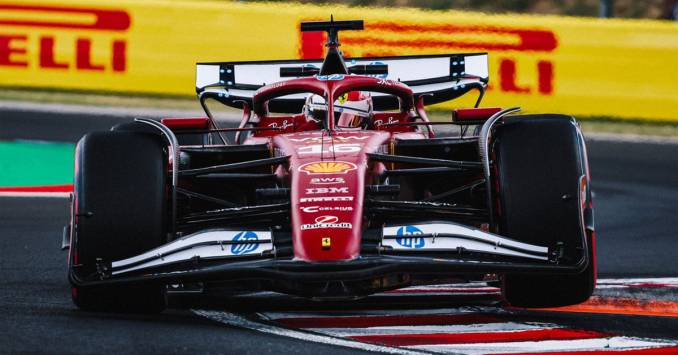
The Brazilian Grand Prix, round twenty-one of the 2025 Formula 1 World Championship, delivered another challenging weekend for Ferrari at Interlagos. The Maranello team's SF-25 single-seater displayed familiar weaknesses that have plagued its season, struggling to find competitive pace on a circuit that demands strong traction, mechanical grip, and aerodynamic efficiency.
The Interlagos circuit, with its combination of long straights and complex, twisty corners, magnified the structural limitations of Ferrari's car concept. The SF-25 demonstrated inadequate top speed resulting from the necessity to increase aerodynamic load, chronic lack of rotation that severely limits overall performance, and problematic ride heights that prevent optimal vertical downforce generation.
Team principal Frédéric Vasseur had repeatedly emphasized the importance of flawless execution heading into the weekend, particularly given the challenges of the Sprint format. This condensed schedule, with only one practice session before qualifying, offered minimal time for setup optimization.
"This condensed schedule, with only one practice session before qualifying, allows very limited time to fine-tune the setup and extract maximum performance from the car," explained Vasseur in pre-race comments. "In this type of format, any minor issue quickly becomes critical, and for a team like Ferrari that still struggles to find the right compromise between top speed and cornering grip, this represents a major handicap."
The French team boss had hoped for more encouraging results after the first day of running, but both Vasseur and Ferrari's technical personnel soon confronted a car that showed no intention of hiding its flaws. The specific combination of medium-speed and slow corners, combined with elevation changes and the long main straight, exposed the weak points of the SF-25's aerodynamic balance and mechanical setup.
During the only free practice session, Ferrari's engineering group led by performance director Loïc Serra worked exclusively with the Hard compound tires. This deliberate choice aimed to obtain consistent performance data, but ultimately highlighted the car's fundamental limitations rather than providing solutions.
The reality for Ferrari at Interlagos proved simple yet harsh: while not a disastrous venue, the circuit does not suit the SF-25's characteristics. The team faced the sobering truth of a car concept that drastically reduces the operating window and limits the ability to extract consistent pace on certain track layouts.
Technical analysts noted that some setup improvements were theoretically possible, but meaningful progress remained constrained by the car's underlying design philosophy. The chronic understeer and top speed deficit created a performance ceiling that strategic adjustments could not overcome.
As Ferrari looks ahead to remaining races, the Brazilian GP weekend serves as another data point in understanding the SF-25's limitations. The team must now determine whether to pursue fundamental design changes for future developments or focus on maximizing performance within the current concept's constraints.
Source: scuderiafans.com