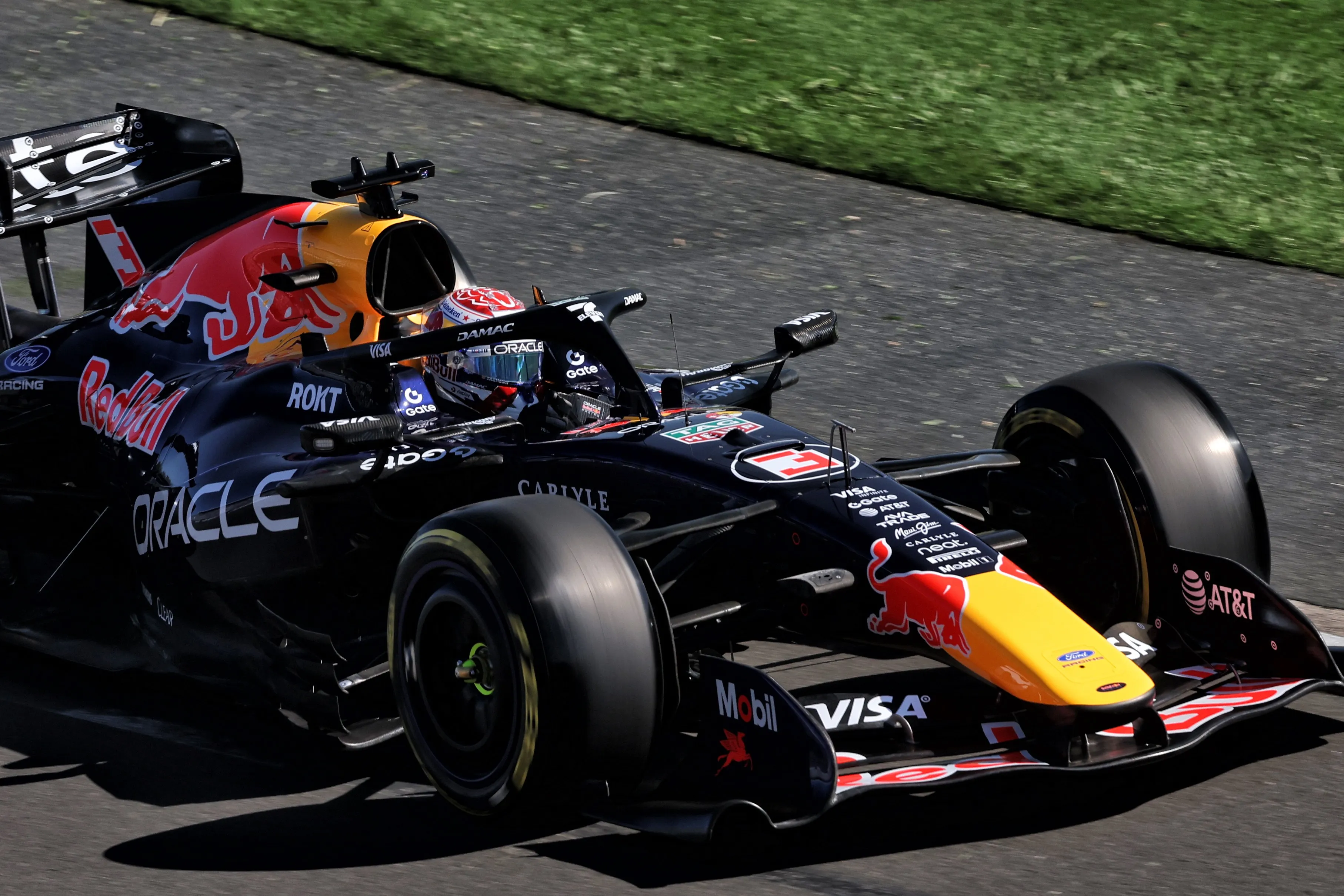
Pirelli has identified the optimal tire strategy for Sunday's Australian Grand Prix following a dramatic qualifying session that saw Mercedes secure a front-row lockout while reigning champion Max Verstappen crashed out early.
The tire supplier's analysis indicates a one-stop approach using medium then hard compounds represents the fastest theoretical strategy, with the optimal pit window falling between laps 20-26. An alternative aggressive soft-hard approach could also prove effective with a switch between laps 15-21.
"It should be noted that the time lost in the pit lane for a tyre change is minimal at around 21 seconds, and Melbourne's history of race neutralisations indicates a 75% probability of a safety car," said Pirelli Motorsport Director Mario Isola, addressing the strategic considerations teams will face.
Verstappen's early exit in Q1 after spinning into the gravel trap leaves the Red Bull driver starting from P20, though he will be allowed to start ahead of Carlos Sainz and Lance Stroll despite all three drivers exceeding Formula 1's 107% qualifying rule.
The Dutchman's recovery drive could see him employ reverse strategy tactics, potentially starting on harder compounds to run longer first stints while others pit earlier.
Weather conditions are expected to play less of a factor than last year's rain-affected season opener, though an 80% cloud cover forecast could still influence track temperatures and tire behavior throughout the 58-lap race.
"Consequently, the possibility of two-stop strategies on Sunday remains real," Isola noted. "In that case, teams could opt for the Medium–Hard–Medium combination, or if they want to take a more aggressive approach, the Soft–Medium–Soft combination."
Melbourne's Albert Park circuit has seen six safety car interventions across the last three races, making strategic flexibility crucial. Teams will need to balance outright pace against the high likelihood of race interruptions that could reset the field and create opportunistic pit stops.
With Mercedes' George Russell and rookie Kimi Antonelli starting from the front row, their tire management will be critical in defending against faster cars behind, particularly Verstappen's Red Bull which showed strong race pace in practice sessions despite qualifying woes.
The stage is set for a strategic battle where tire wear, safety car probability, and recovery drives will define the outcome of Formula 1's 2026 season opener.
Source: gpblog.com